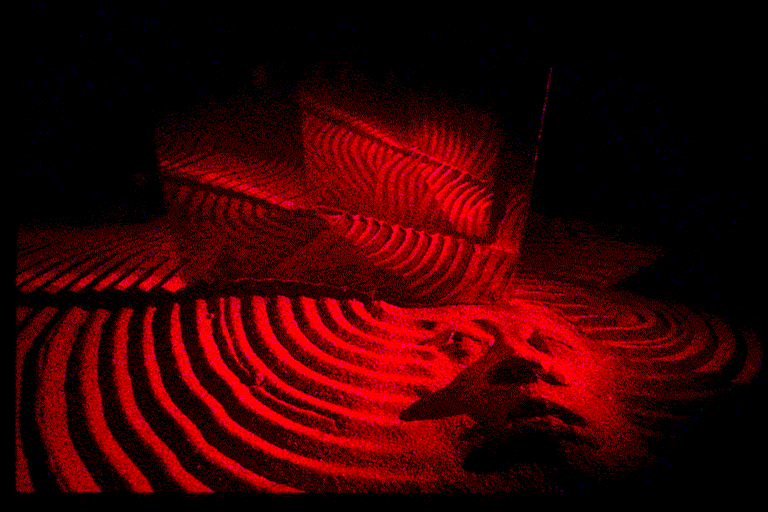
Visions in the Dark brings together the three main holographic artworks created by Ken Dunkley. Dunkley a passionate artist and engineer built and flew model airplanes before taking up photography. While at NYC studying physics he created a semintal hologram Thoughts in 1973. This laser viewable composition is the first recorded example of independent “serially connected” visual spaces. The first visual space contains a second that is completely independent of the first, and it in turn contains a third independent space. And so on. Thoughts is recognized as the first art hologram to fully utilize the holographic medium and has been credited as one of “the pivotal holograms in the development of holography as an art form”
Thoughts was featured at MoMA in 1977 and is often cited as the hologram that inspired other artists to adopt the medium. Dunkley expanded his optical odyssey to include Space Children, and the interactive hologram, Homecoming. Each of these piece requires laser illumination, producing an image with depth that draws you into the deep space. These outstanding works were exhibited together for the first time at the HoloCenter Summer Museum on Governors Island in 2015
[Space Children]
‘we are all children lost within the relentlessness of interstellar space’
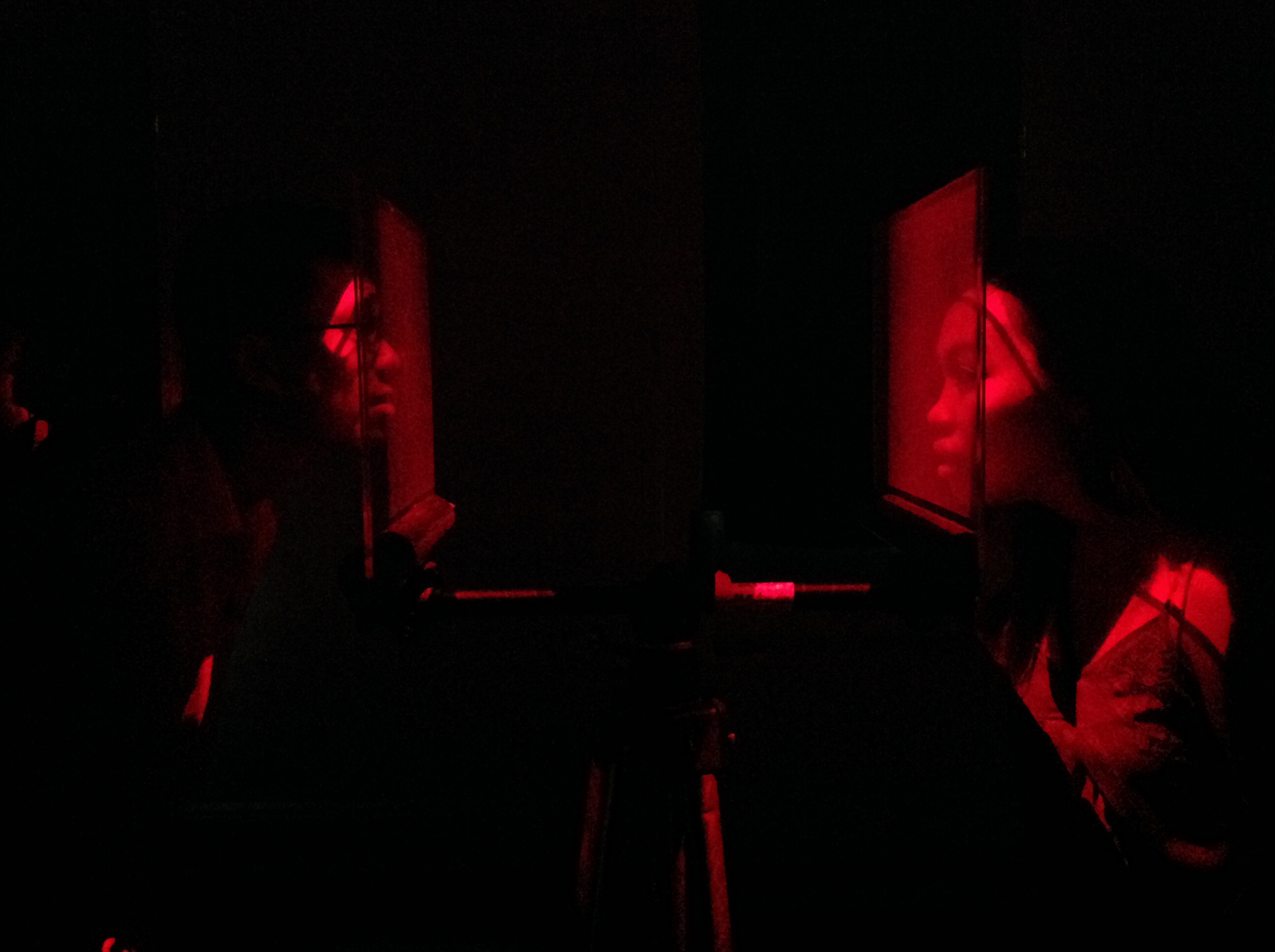
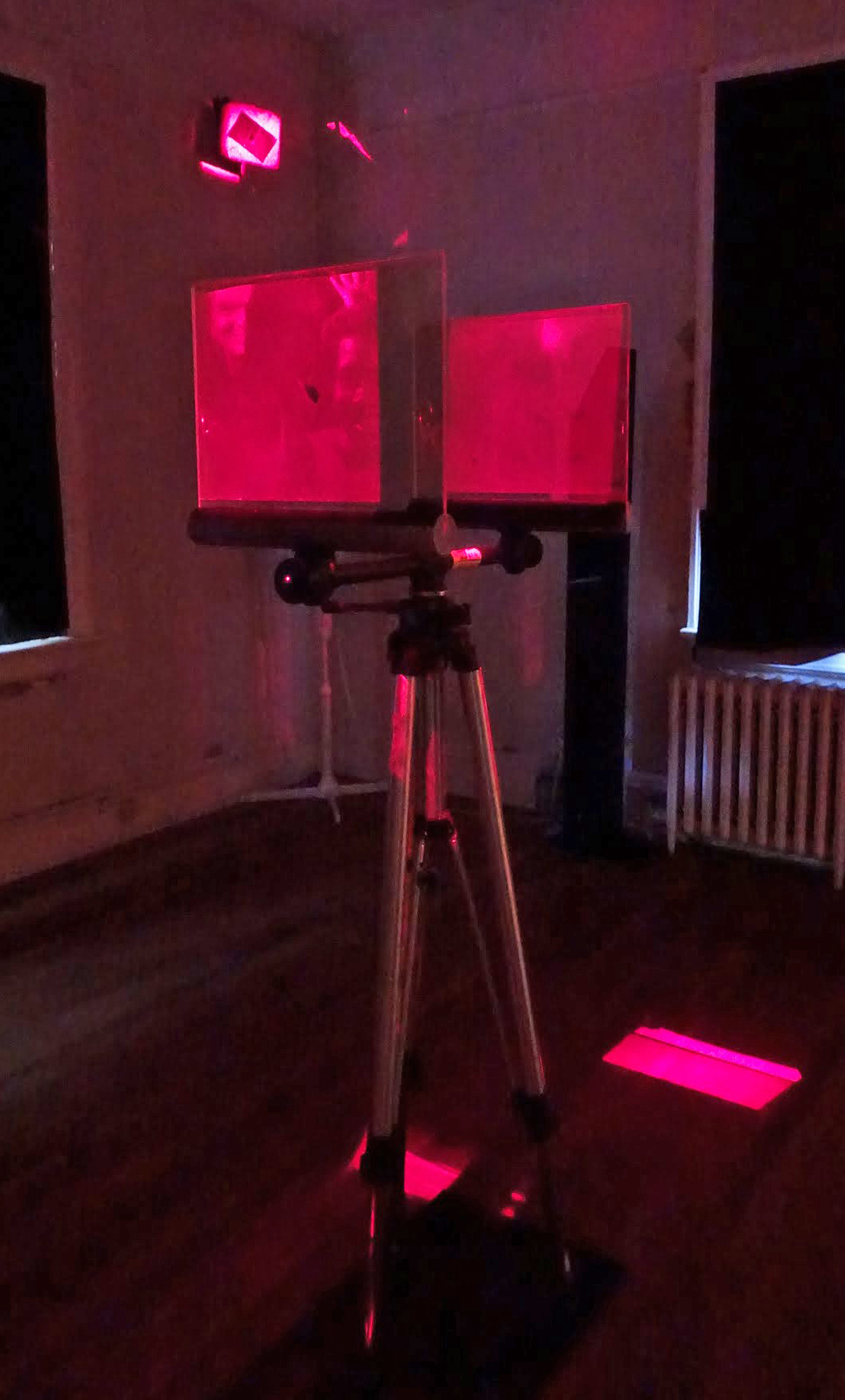
Homecoming was created as part of a HoloCenter Artist Residency at the, Court Square Studio in 2001. The hologram diptych are place facing each other, to be experienced by two viewers simultaneously. Looking though a hologram you see the other viewer surrounded by people. They in turn see you. The experience however is not symmetrical, due to the emotions of the virtual crowd.
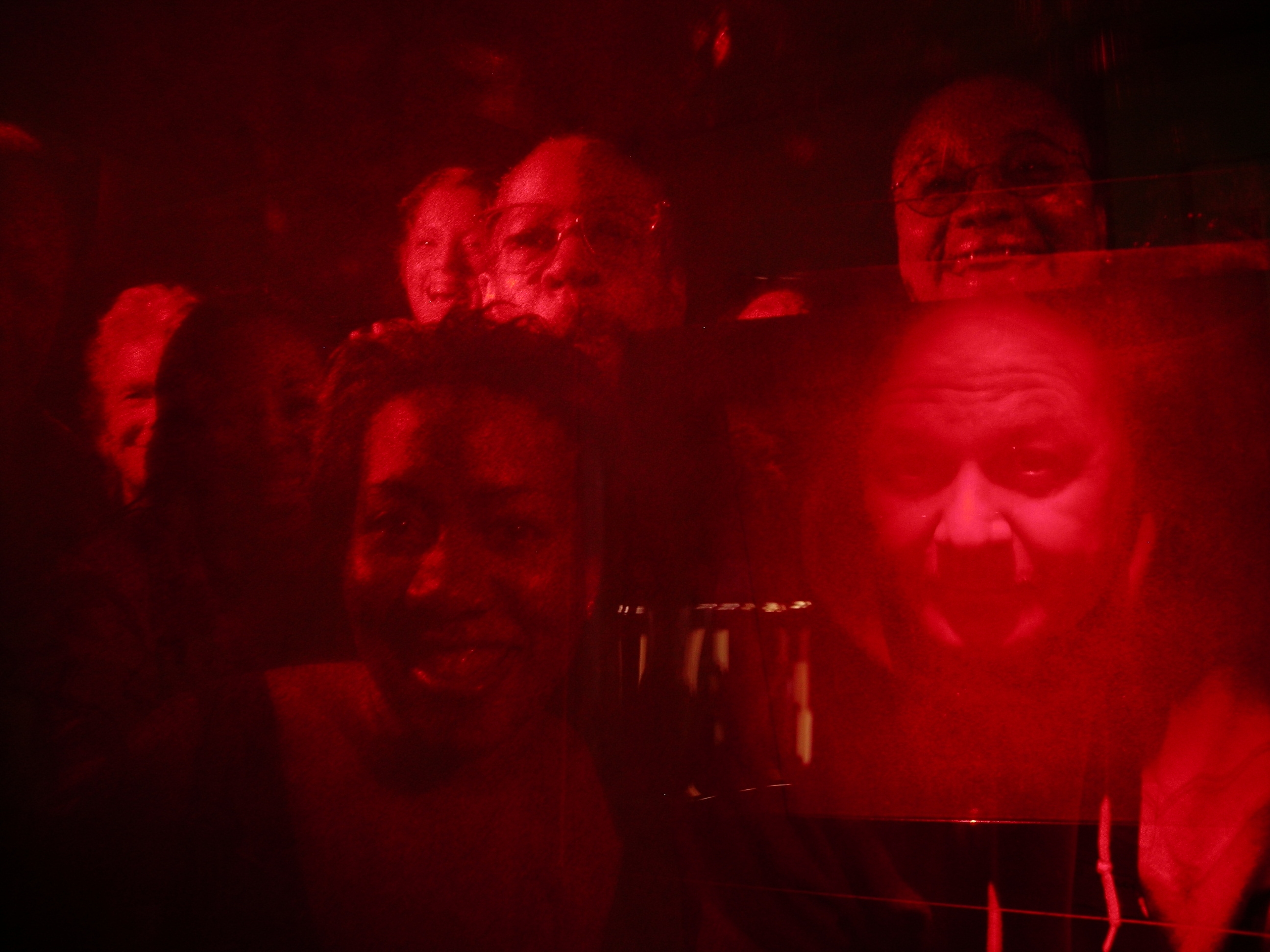
‘The elusive nature of conscious reality (versus physical reality) is my inspiration for everything: with photography I capture and manipulate an interesting moment of time…with holography I record and manipulate an interesting volume of space and time.’
Ken Dunkley, 2015
from interview with Meagan Meehan published in Atom Bash
Save